- SEO isn’t dead, but the old playbook is. Shortcuts, thin content, and keyword stuffing no longer work.
- AI Overviews have pushed click-through rates down 30% and created a zero-click search environment.
- Top-of-funnel blog traffic is declining. Middle and bottom funnel content is where the real clicks and conversions are happening now.
- Topical authority, E-E-A-T, and original content are what search engines and LLMs reward in 2026.
- Backlinks and branded mentions are the most reliable way to get cited in AI Overviews and LLMs.
- Stop measuring SEO by traffic alone. Organic leads and revenue are the only KPIs that matter.
58.5% of Google searches end without a single click. Not because people didn’t find what they were looking for. But because Google answered the question before they ever reached your site.
If you’re running a business that depends on organic search traffic from Google, that number should get your attention.
SEO isn’t dead, but the version most people are still practicing today probably is. I’ve spent the last three-plus years doing SEO across ecommerce and local clients, and what I’ve seen firsthand matches what the data is showing: the practitioners still winning aren’t doing anything radical. They just stopped clinging to a playbook that Google has systematically dismantled since 2024.
In this article, you’ll learn exactly what changed, what it means for your site, and what the adapted SEO strategy actually looks like in 2026.
What Traditional SEO Actually Meant
To understand where we are, you need to remember where we came from. For most of SEO’s history, Google’s search results page was a simple, predictable list of ten blue clickable links. You typed something in, Google served up the most relevant websites, and users clicked through to find their answer. That was the whole game.
SEO professionals learned to reverse-engineer how Google ranked those links. The core formula looked something like this:
- Research keywords people were actively searching for
- Build pages optimized around those keywords
- Earn backlinks from other websites to signal authority
- Keep your site technically clean enough for Google to crawl and index
It was complicated work, but the rules were relatively stable and the rewards were clear. Rank higher, get more clicks, grow your business.
Organic search traffic was essentially free advertising. You put in the upfront work of creating and optimizing content, and Google rewarded you with a steady stream of visitors month after month.
The model was so reliable that entire businesses were built almost entirely on organic search traffic, sometimes with 90% or more of their visitors coming from Google alone.
That reliability created a kind of comfortable complacency. Many site owners kept running the same playbook for years, churning out keyword-targeted content, chasing backlinks, and watching the traffic roll in. The problem is that Google was quietly changing the game underneath them, and by the time the changes became impossible to ignore, a lot of people were caught completely off guard.
What Changed and Why It Matters
The Helpful Content Update and the Crackdown on Affiliate Content
The first major shock came in 2022 when Google announced its Helpful Content Update. The message was blunt: stop creating content for search engines and start creating it for actual human readers. Google followed through in 2024 when it rolled the update into its core algorithm, and the fallout was significant.
The update targeted what Google called “site reputation abuse,” essentially publishing content on a high-authority website not to serve its audience, but to borrow its ranking power for competitive terms.
Affiliate-heavy content was hit particularly hard. Even major publishers like CNN, Forbes Advisor, and Fortune saw their traffic drop dramatically, with cumulative losses across big publishers estimated at around $7.5 million worth of traffic. If companies with the brand authority of Forbes weren’t protected, your site certainly isn’t either.
On the affiliate question specifically, I think a lot of people misread what Google actually did here. The core problem wasn’t affiliate links themselves, it was that affiliate sites were failing their primary function.
One big reason so many of them got hit is that every single review on these sites read like a sales pitch. Every product was amazing, every product was a top pick, nothing ever had a real downside. That’s not a review, that’s a marketing copy with an affiliate link attached.
Google never said your experience with a product has to be positive. It can absolutely be negative. What Google actually wants is genuine first-hand experience, and if you’ve actually used a product, you’ll have real opinions about it, good and bad. Most affiliate sites couldn’t pass that test because the writers had never touched the products they were recommending.
The second issue is more structural. Think about it from a user’s perspective: you land on a site, read a product review, decide you want to buy it, and then get redirected to another site to actually complete the purchase. Google essentially removed that middleman and sent users directly to the product pages instead. That’s not Google killing affiliate marketing, that’s Google enforcing a better user experience.
AI Overviews and the Rise of Zero-Click Search
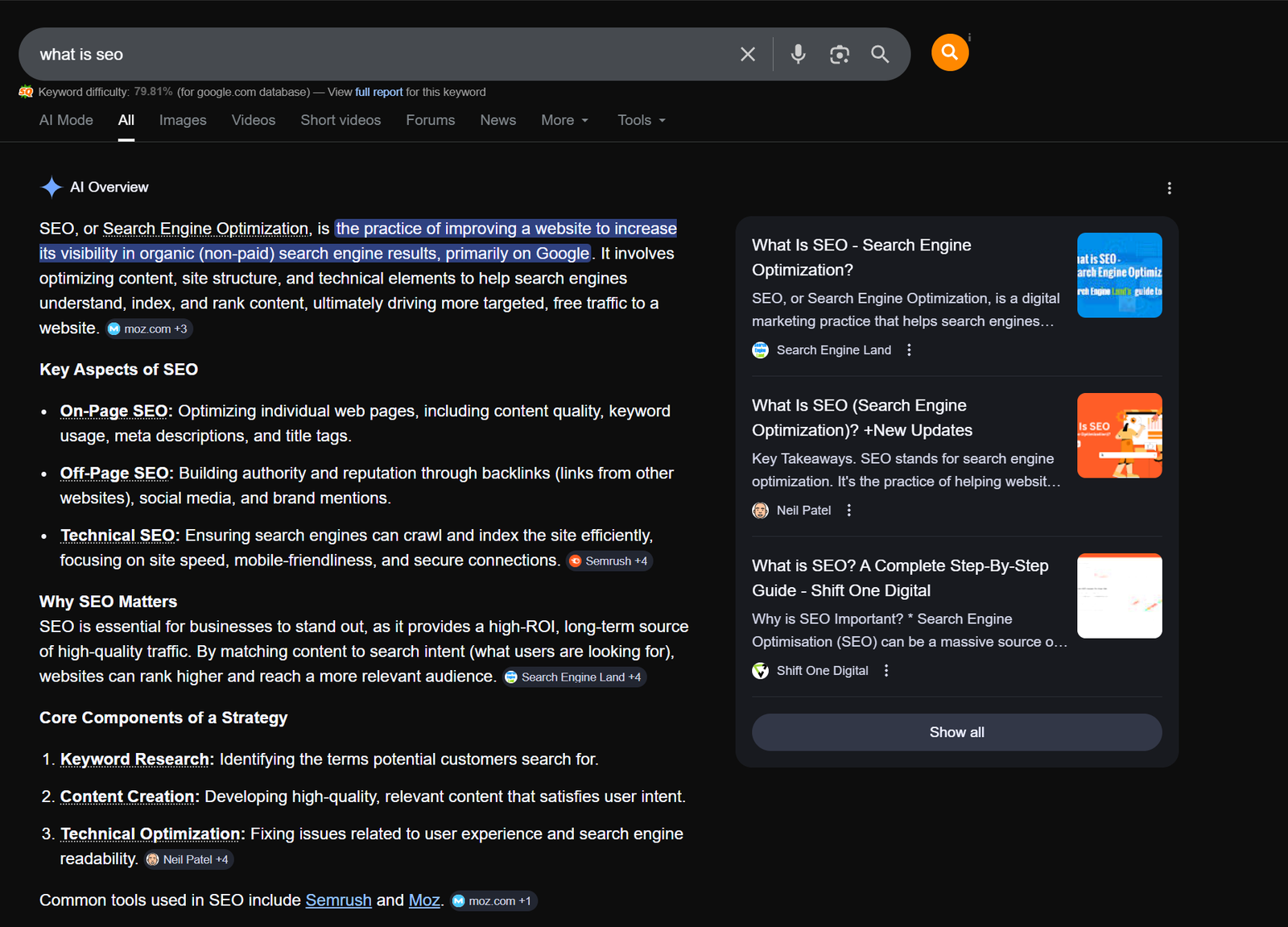
This shift affected everyone, regardless of whether they ever touched affiliate marketing. Google launched AI Overviews at scale at Google I/O 2025, placing a large AI-generated answer box at the very top of results, above everything including paid ads. For informational queries especially, users now get complete answers without clicking a single link. The data tells a pretty alarming story:
- AI Overviews now appear in 21-25% of all Google searches, up over 100% from early 2025. At tens of billions of daily searches, that’s an enormous volume of queries where your content goes unseen unless it’s cited inside the overview itself.
- Click-through rates are down 30-61% on affected queries. If your site was previously earning 1,000 visits a month from a particular search term, that same ranking position might now be delivering closer to 700, through no fault of your own and with no obvious fix.
- 58.5% of U.S. Google searches already result in zero clicks. More than half the people searching for topics you’ve written about may never visit your site, even if you rank on page one. That’s not a traffic problem you can keyword your way out of.
When AI Overviews first rolled out, I honestly thought it was overhyped and wouldn’t meaningfully hurt traditional SEO. I was wrong. What I started noticing across my clients was a clear pattern: top-of-funnel blog traffic was quietly declining, while collection pages, product pages, and service pages were seeing more clicks and engagement. That pattern told me something important had shifted, and it changed how long SEO actually takes to produce results across different content types.
Search Is Fragmenting Across Platforms
Google is no longer the only place people search. TikTok, Reddit, Amazon, YouTube, ChatGPT, and Perplexity are all capturing search behavior that used to flow exclusively through Google.
Younger audiences in particular are increasingly turning to social platforms and AI tools to discover products, get recommendations, and answer questions. Because it’s easy and quick.
Perplexity holds about 2.7-3.1% of global search market share and ChatGPT around 61.3%. In raw numbers those figures are tiny, and you shouldn’t be abandoning your Google strategy to chase them. But both platforms roughly tripled their share in the past year alone, and a channel growing at that rate deserves a seat at your planning table even if it doesn’t yet deserve the top spot on your priority list.
Where SEO Stands Today
Google still controls 84.17% of all the U.S. web traffic in 2026. That’s not a platform in decline. That’s an absolute monopoly on how people find information online, and it means that ignoring Google SEO in favor of newer platforms would be a serious strategic mistake. Organic search still drives enormous amounts of traffic and revenue for businesses that know how to compete.
The rules have shifted significantly, yes. But the game is still being played on Google’s turf. What’s changed is how Google decides who wins.
What’s Actually Dead vs. What’s Evolving
Let’s be clear about what’s actually gone:
- Keyword stuffing
- Spinning out hundreds of thin, interchangeable articles
- Building pages primarily to funnel users toward affiliate links
- Buying links in bulk from low-quality sites
These tactics stopped working gradually and then all at once, and no amount of nostalgia is going to bring them back.
What’s evolving is everything else.
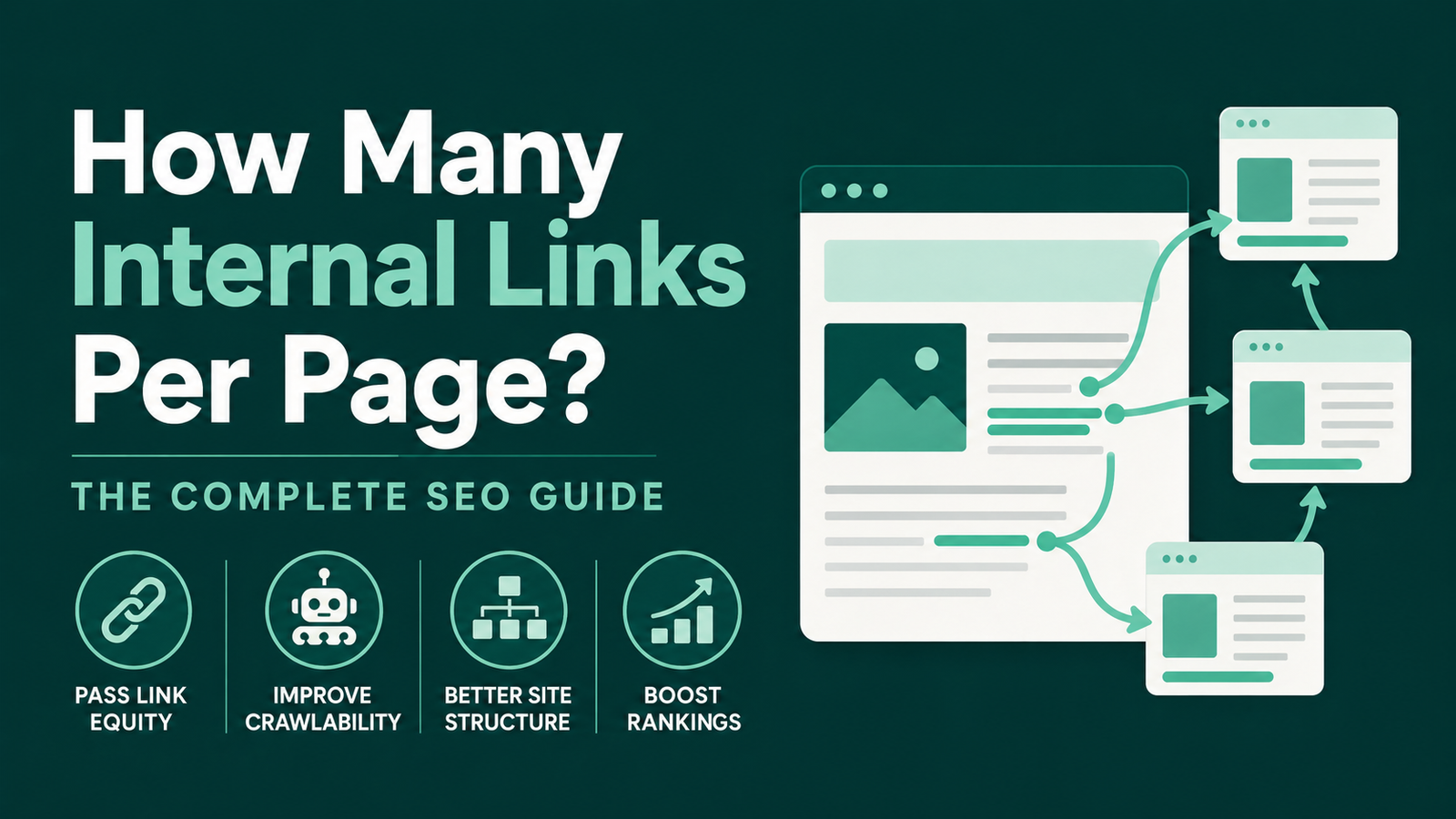
Technical SEO still matters. Site speed, mobile optimization, Core Web Vitals, structured data, strategic internal linking, clean URL structures.
These fundamentals haven’t gone anywhere. Content quality matters more than ever, but the definition has shifted from “comprehensive keyword coverage” to “genuine expertise and original insight.” Backlinks still carry weight for traditional SEO, though LLMs care more about how thoroughly and clearly your content explains a topic than how many sites link to you.
Why “SEO Is Dead” Is a Recycled Narrative
People have been declaring SEO dead since at least 2007. Every major algorithm update, every new technology, every shift in user behavior has triggered the same prediction. It’s been wrong every time, not because SEO didn’t change, but because it adapted.
Traditional SEO has changed, no question. But instead of adapting, most people are panicking. The SEOs who are thriving right now are the ones who recognized the shift early, adjusted their approach, and kept moving. The ones declaring it dead are usually the ones who built their entire strategy around tactics that Google just stopped rewarding.
What Search Engines and AI Tools Reward Now
E-E-A-T and Real-World Expertise
Google’s E-E-A-T framework, Experience, Expertise, Authoritativeness, and Trustworthiness, has become more central to rankings than ever before. The addition of that first “E” for Experience signals that Google wants content created by people who have actually done the thing they’re writing about, not just researched it.
This is something AI genuinely struggles to fake, which is exactly why Google is leaning into it so heavily as a ranking signal.
Building E-E-A-T signals takes time, but the investment pays off. Here’s where to focus:
- Create content that showcases real-world experience, not just research
- Earn mentions and backlinks from reputable sources through digital PR
- Publish original research, case studies, and customer stories
- Foster community engagement through reviews and user-generated content
Topical Authority Over Keyword Density
The old approach was to find a keyword with decent search volume and build one primary keyword per page. The new approach is to become the most comprehensive and credible source on an entire topic area, covering it so thoroughly that both Google and AI tools naturally turn to your content as a reference.
One of the most practical applications of this I’ve seen comes from ecommerce SEO. Rather than creating a single collection page for a product and targeting one broad keyword, the smarter move is to multiply your collection pages around every relevant variation.
Take a 400mm white vanity unit with basin as an example. Instead of one “vanity units” collection page competing against massive, established competitors, you create a “400mm vanity units” page, a “white vanity units” page, and a “vanity units with basin” page separately. Each one targets a lower competition keyword, but combined they capture the same search volume as the big keyword, without the brutal competition.
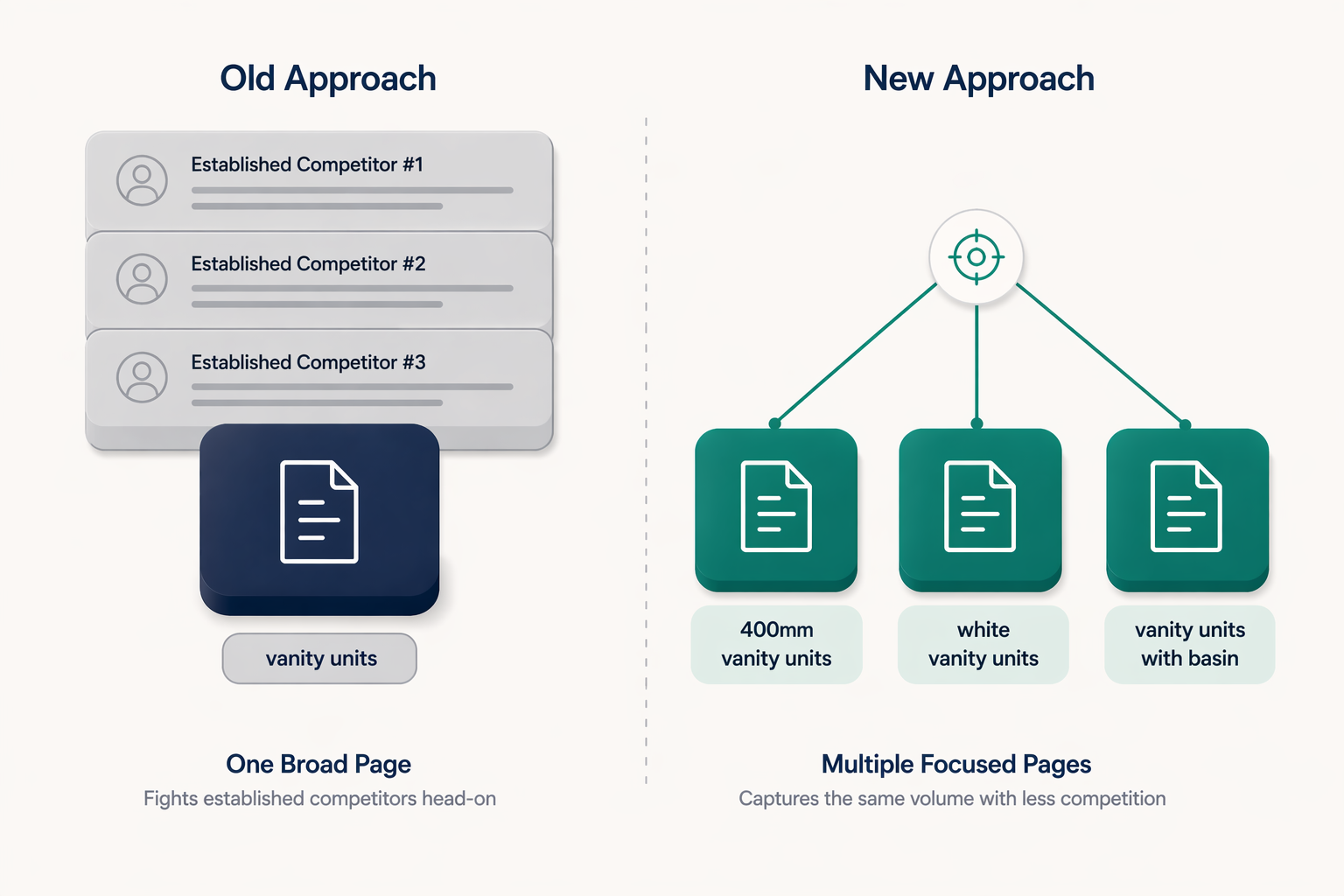
That approach, which I learned from ecommerce SEO specialist Kai Cromwell, has been one of the most effective frameworks I’ve applied for ecommerce clients.
The same principle applies to local SEO. Rather than jumping straight to expanding your service or location pages, exhaust your current funnel first. If you offer AC repair, build out everything around that single service before moving on: local guides, repair guides, how-to content, related sub-pages. Nathan Gotch’s approach to local SEO is built around this idea, and it works because it signals deep topical authority in your core area before you spread wider.
Original and User-Generated Content
In a world where AI can instantly generate a surface-level take on virtually any topic, original content has never been more valuable. If your content is just a repackaged version of what the top-ranking pages already say, you’re competing directly with AI summaries that do the same thing faster and for free.
What AI can’t replicate is genuine firsthand experience and authentic community voices. The content that both Google and LLMs prefer to cite includes:
- Customer reviews and community Q&As
- Case studies based on your own client work
- Original research and proprietary data
- Photos and content from your actual team
- Insights drawn from your own analytics
A great real-world example is GoPro’s user-generated content strategy, where real customers documenting real experiences created a content library that no algorithm could manufacture.
Technical Fundamentals That Still Matter
None of your content strategy matters if your site is technically broken. Google’s Core Web Vitals are still actively used as ranking signals, with specific targets worth knowing:
- Largest Contentful Paint (LCP): Main content should load in under 2.5 seconds. If your site takes four or five seconds, you’re likely losing rankings and visitors simultaneously.
- Interaction to Next Paint (INP): Your page should respond to user input in under 200 milliseconds.
- Cumulative Layout Shift (CLS): Keep your score below 0.1. A page that jumps around while loading makes users distrust your site before they’ve read a single word.
Mobile optimization is non-negotiable too. More than 59-64% of web traffic now comes from mobile devices, so a site that isn’t fully optimized is essentially turning away half its potential audience. Tools like Google PageSpeed Insights and Pingdom can help you identify exactly where your site is falling short.
How to Adapt Your SEO Strategy
Stop Chasing Top-of-Funnel, Exhaust the Middle and Bottom Instead
This is the single biggest strategic shift I’ve made across my client work, and the results have been clear. After noticing that top-of-funnel blog traffic was quietly declining while commercial pages were gaining traction, I stopped recommending top-of-funnel content altogether and redirected that effort toward middle and bottom-of-funnel content.
The content that’s outperforming right now includes:
- Product reviews and detailed comparisons
- Best X for Y roundups
- You vs. competitor pages
- Case studies and client results
- Interviews and podcasts
- Local guides and service-specific deep dives
These formats serve users who are already closer to a decision. They’re not browsing for information. They’re evaluating options, which means the traffic converts better and the pages are far less vulnerable to AI Overview displacement.
For clients panicking about traffic drops, my advice is simple: stop measuring success in top-of-funnel pageviews and start measuring it in leads and revenue. Those middle and bottom funnel pages are where the money actually lives.
Optimize for AI Overviews and LLM Citations
Getting cited in AI Overviews and LLM-generated answers is the new version of ranking on page one. The approach overlaps significantly with good SEO practice: clear structure, concise answers, logical headings, clean HTML, and schema markup all help both search engines and AI tools understand your content.
From what I’ve seen across my own clients, it comes down to two things: backlinks and branded mentions. LLMs like ChatGPT, Claude, and Google’s AI Overviews cite data from authoritative sites, but I’ve also seen brand new domains, sometimes only a month or two old, get cited in less competitive niches. The pattern is consistent though. If authoritative sites are linking to you and mentioning your brand, Google and other LLMs will start citing you too. Backlinks function as a vote of confidence, and that vote carries weight in both traditional search and AI-generated results.
Rethink Content Length and Format
The 2,000-word article is no longer automatically the right answer. AI Overviews increasingly pull from shorter, more focused content, and pages appearing in those summaries tend to run between 500 and 800 words for many informational queries. If you’ve been padding articles to hit a word count rather than stopping when you’ve actually answered the question, you may be working against yourself.
For ecommerce and local SEO specifically, good content on collection and product pages doesn’t need to be long. It needs to be benefit-driven, user-centric, and to the point. Users landing on those pages have already moved past the awareness stage. They don’t need an essay. They need clear information that helps them make a decision.
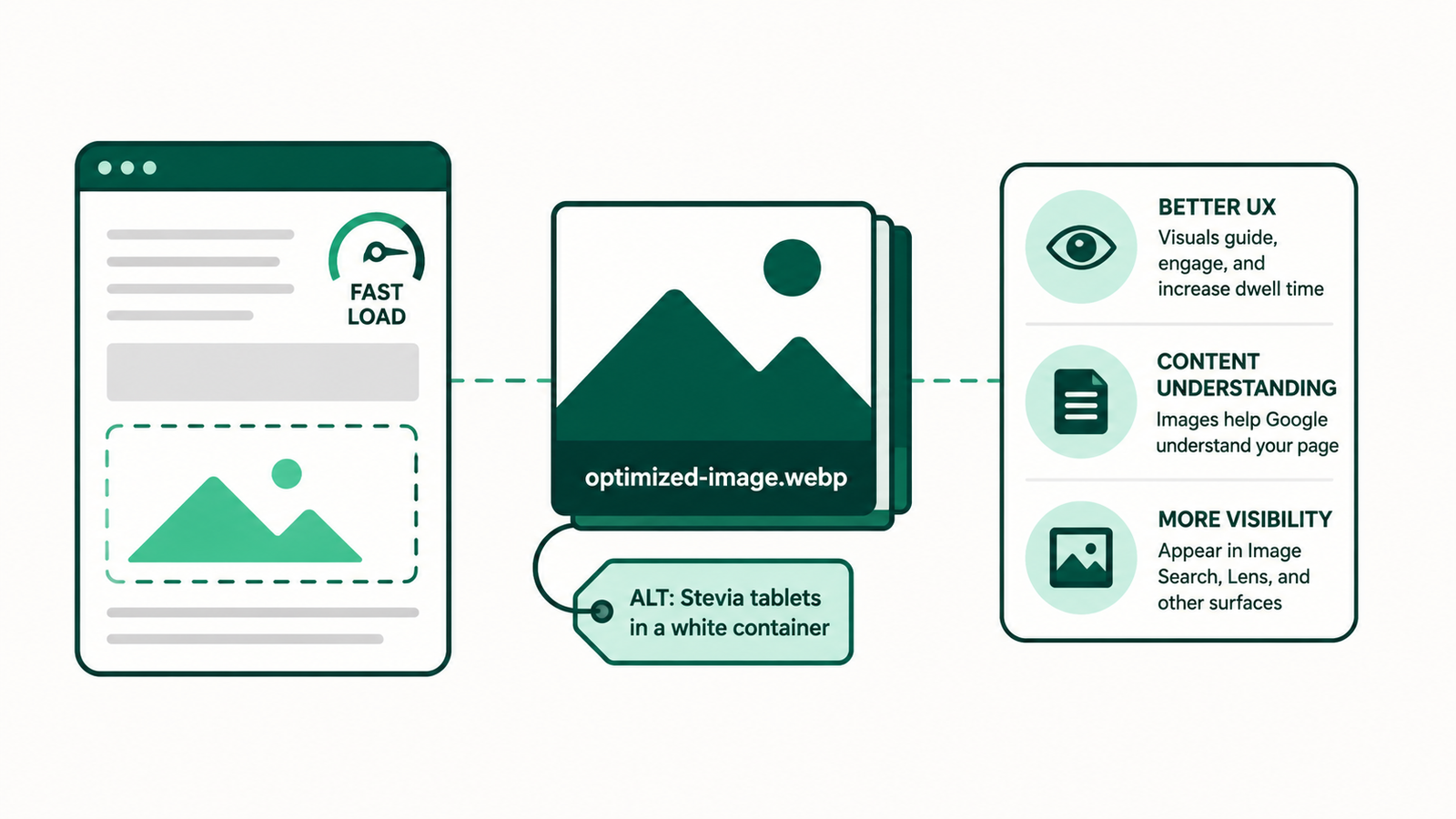
Format matters more now too. Original videos, GIFs, and custom images give your content something AI simply cannot replicate or summarize away. That’s a genuine competitive advantage in a zero-click environment.
Build Backlinks the Right Way
Backlinks remain one of the most reliable ways to build authority in both traditional search and LLM citations. But the approach matters. Here’s the link building framework I use for clients starting from scratch:
- Link insertions: Start with 2 to 3 per month. Target pages that are already ranking and getting traffic, and make sure the overall site isn’t spammy.
- Guest posts: Write guest posts targeting low keyword difficulty terms. Link back to your link insertion article and your own site to create a supporting link structure.
- PR: Expensive but worth it. A well-placed PR mention from a credible publication does double duty, building both backlink authority and the branded mentions that LLMs pay attention to.
The key with all of these is relevance and quality. A handful of strong, relevant links from credible sites will outperform dozens of weak ones every time.
Expand Beyond Google
Your optimization strategy needs to reach beyond Google’s search results. This doesn’t mean abandoning SEO. It means layering additional distribution channels on top of your existing foundation:
- TikTok: Engaging short-form video with relevant hashtags
- Reddit: Genuine community participation without overt promotion
- YouTube: Both long-form and short-form video to reach different viewer types
- Voice search: Conversational writing that directly answers common questions
- Amazon and marketplaces: Optimized product titles, descriptions, and reviews
Your audience can convert from virtually any touchpoint now. Showing up across multiple platforms dramatically increases your chances of being in front of them at the right moment.
Measure What Actually Matters: Leads and Revenue
If you’re measuring SEO success purely by organic click volume, the numbers are going to look increasingly grim. Zero-click searches mean you can be getting significant exposure without a single website visit. That doesn’t mean you’re failing. It means your measurement framework is out of date.
Personally, the only KPIs I care about for my clients are organic leads and revenue. Everything else is a vanity metric. Clients don’t want to hear about impressions or keyword rankings in isolation. They want to know if SEO is making them money. When you frame your reporting around that, the conversation becomes a lot easier and the relationship becomes a lot stronger.
That said, these supporting metrics are still worth tracking:
- AI and SERP feature visibility: Appearances in AI Overviews, featured snippets, and “People Also Ask” drive brand awareness even without a click
- Branded search volume: Growth here signals your multi-platform efforts are working
- Engagement metrics: Scroll depth, time on page, and return visits reveal more about content quality than bounce rate
- Assisted conversions: Track where users first touched your content, even if they converted later through a different channel
The Verdict: Evolution, Not Death
The data, expert analysis, and practitioner experiences all point to the same conclusion.
SEO is not dead. The version that relied on shortcuts, thin content, and gaming algorithms is done, and honestly, good riddance. It was never really about helping people find what they needed.
The SEO that wins in 2026 is built on genuine expertise, technical excellence, multi-platform distribution, and content that actually earns its ranking. It’s more demanding than the old approach, but it’s also more durable. Content built on real expertise doesn’t collapse when Google updates its algorithm, because it was never dependent on a loophole.
The practitioners winning right now adapted early, expanded their definition of search, and doubled down on content that genuinely deserves to rank. That’s the only version of SEO worth doing, and it’s the version that still works.