- SEO typically takes 3 to 6 months, and up to 12 months in competitive industries
- Results depend on website authority, niche competition, technical health, content quality, and execution consistency
- Local SEO moves faster than ecommerce because competition is smaller and more geographically contained
- Start with a technical audit, move to on-page optimization, then content and link building
- By months three to four you should have enough data to know what’s working
- Double down on what moves the needle and stop spreading effort thin
- Don’t let anyone guarantee rankings in three or four months
- Do the work, measure consistently, and let your results speak
Most businesses expect SEO to work like a light switch. You flip it on, watch the traffic pour in. Well yeah, that’s not how things work. It’s more like planting a garden. You do the work upfront, and months later, things start to bloom.
I’ve been doing SEO for over three years as a freelance consultant, working across local businesses and ecommerce stores. In that time I’ve seen campaigns produce results in 30 days and others that needed six months before anything meaningful clicked.
I’ve also reviewed research and insights from some of the most respected voices in the field, including Google’s own statements on the matter, to give you the clearest, most honest answer possible.
Here’s what you will learn: why SEO takes as long as it does, what’s actually happening phase by phase, and how to speed things up without cutting corners.
The Short Answer: 3–12 Months (And Why It Varies)
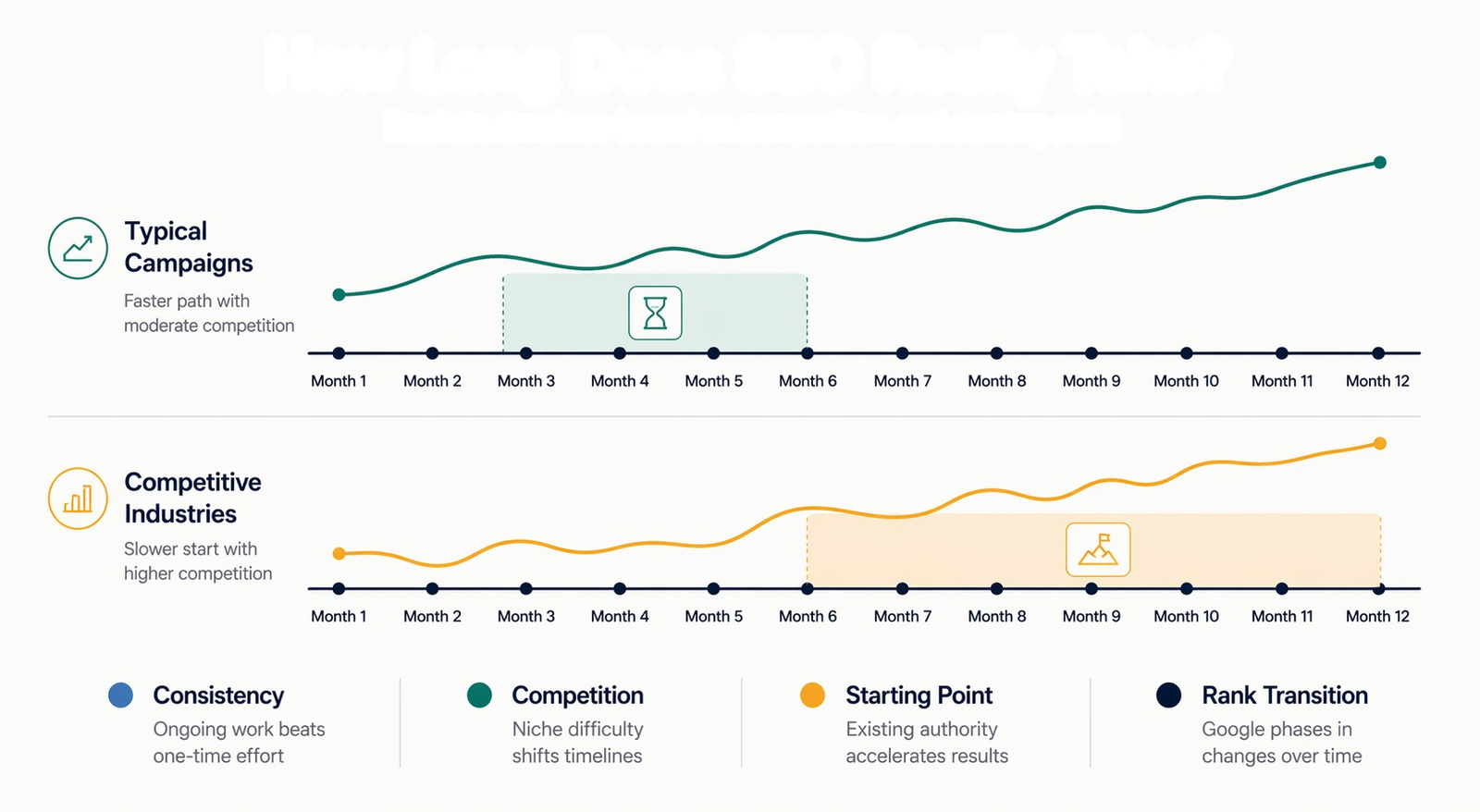
The most honest answer is that SEO typically takes three to six months to produce measurable results. And in competitive industries, that window stretches to six to twelve months.
A poll of nearly 3,700 SEO professionals confirmed this range, and Google’s own Maile Ohye has publicly stated that most businesses need four months to a year before they see meaningful improvement.
But here’s the thing: those numbers assume consistent effort, solid strategy, and no major technical roadblocks. The moment any of those conditions are missing, the timeline stretches.
I also think people overcomplicate this more than they need to. There’s no magic framework that tells you SEO works in 12 days, 12 weeks, or 12 months. It purely depends on your area, niche, and competition.
Some campaigns click in three months. Others take eight. The sooner you let go of a fixed timeline and focus on the work, the better.
SEO isn’t advertising. You can’t pay your way into Google’s organic results. To rank, you have to genuinely demonstrate that your page is the best, most relevant, most helpful result for a given search. That means outperforming every other page on factors like relevance, content quality, user experience, and trustworthiness. Doing all of that well simply takes time.
There’s also something worth knowing called “rank transition,” a concept referenced in a Google patent. Even after you make strong improvements to a page, Google doesn’t always apply ranking changes immediately.
It phases them in over time, sometimes letting a page drop temporarily before settling into its new position. Many site owners panic during this phase and make changes that actually slow progress. Patience here is not passive. It’s strategic.
Key Factors That Determine Your SEO Timeline
No two websites start from the same place. Your timeline is shaped by a combination of technical, competitive, and business factors that are unique to your situation. Here’s what matters most.
Website Age & Domain Authority
Older websites tend to rank faster. That’s not favoritism, it’s math. An established domain has more pages, more content, more backlinks, and a longer track record with Google. Search engines have more context to evaluate it, which means they’re more confident surfacing it in results. In short, they trust that domain more.
New websites face what many in the industry call the “Google Sandbox,” an unofficial term for the period, usually one to three months, where new sites struggle to rank even when their content is strong.
Google simply hasn’t built up enough trust signals yet. John Mueller from Google has said it can take up to a year for Google to fully figure out where to rank a new site.
That said, a newer domain with a highly relevant, well-optimized foundation can still make meaningful progress. The gap just has to be earned rather than inherited.
Competition & Keyword Difficulty
The keywords you target have a massive impact on how quickly you’ll rank. A keyword like “What is SEO” carries a difficulty score of 97 out of 100. Competing for it means going head-to-head with pages that have tens of thousands of backlinks. That fight can take years, not months.
On the other hand, a keyword like “how to create seo strategy” carries a difficulty score around 37. Much more achievable, and with the right strategy, you can rank number one for it within a reasonable timeframe.

I’ve seen sites move from position 100 to position one in under two months for low-competition keywords, simply by targeting smarter.
This is also one of the reasons local SEO tends to produce faster results than ecommerce SEO.
When you combine a specific niche with a specific location, competition drops significantly. You’re no longer competing nationally or internationally. You’re competing in a city or a region, which is in most cases less competitive.
Less competition, lower search volume, but much higher conversion intent. In my experience, local campaigns consistently move faster than ecommerce ones for exactly this reason.
Technical SEO Health
Technical SEO is the foundation everything else is built on. You can produce the most compelling content in the world, but if Google can’t crawl or index your site efficiently, none of it matters.
When I take on a new client, the first thing I look at is Google Search Console. I want to see which pages are indexed and which aren’t, and whether any major pages are being blocked or excluded.
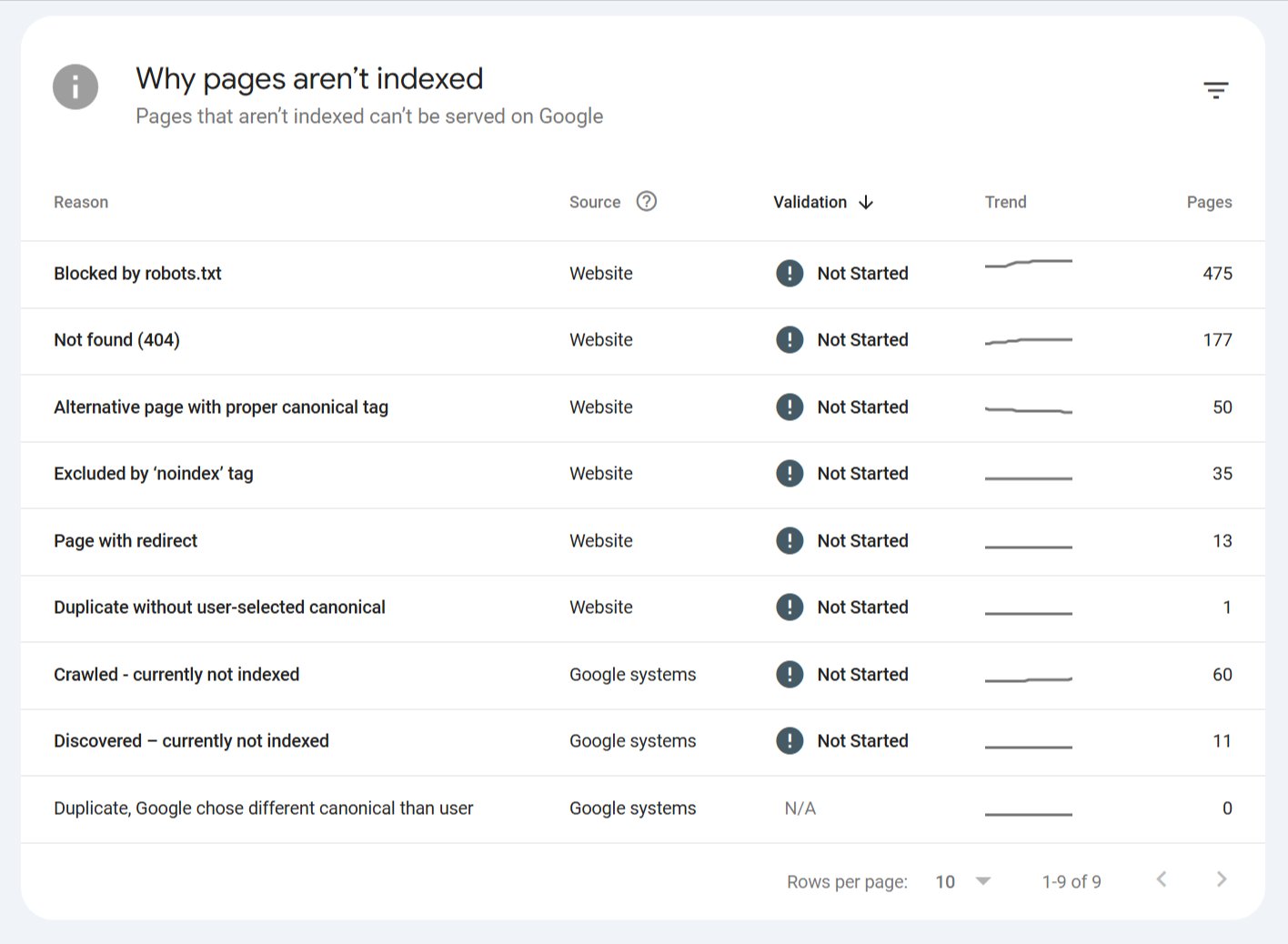
You’d be surprised how common this is. In my experience, roughly eight out of ten sites have at least one important page that isn’t indexed, usually because of thin content or not enough copy on the page.
People put a hundred or two hundred words on a page and expect Google to index it, which sometimes works but often doesn’t.
After that, I conduct a complete technical audit and look for broken links and surface-level errors before going any deeper.
Technical SEO work is often invisible when it’s running smoothly, but catastrophically visible when it’s not. Auditing and resolving these issues early is non-negotiable.
Content Quality & Search Intent
Publishing content isn’t enough. The content has to match what users are actually looking for, which is what SEO professionals call search intent.
If someone searches “kid-friendly hotels in California,” they want a list with options, pros, cons, and pricing. A general blog post about family travel won’t satisfy that intent, regardless of how well-written it is.
More content does not equal faster results. I’ve seen sites publish hundreds of AI-generated articles at scale, watch their traffic spike briefly, and then crash after a Google Helpful Content Update wiped it out.
Google has made it clear that thin, low-value content not only fails to rank, it can drag down the rest of your site.
What you need is building a content ecosystem. Strong product or service pages, supported by in-depth articles, case studies, and knowledge-base content that answers real buyer questions at every stage of the journey. That structure builds what SEOs call topical authority, and it signals to Google that your site genuinely knows its subject.
I follow Nathan Gotch‘s approach of building out one complete content funnel before moving to the next. For a local business, that means creating every service page and location page you can before writing local blog content.
Once that tier is solid and sessions are coming in, then you move to the next layer. It’s a methodical approach that prevents the scattered, half-finished site structure that slows so many businesses down.
Backlinks & Off-Page Authority
Backlinks are one of the most influential and important ranking factors in existence. When reputable websites link to yours, it signals to Google that your content is credible and worth surfacing.
Think of it like a vote of confidence. The more authoritative the source, the more weight that vote carries.
The challenge is that building a strong backlink profile takes time and can’t be rushed. A sudden spike of low-quality backlinks can actually trigger algorithmic scrutiny and slow your progress or even get you penalized. Natural, gradual growth from relevant, trusted sources is what accelerates rankings sustainably.
For local businesses, some of the most effective backlinks come from local sources like chamber of commerce directories, local newspapers, community event pages, and relevant guest posts.
For ecommerce clients, I rely heavily on competitor backlink analysis, finding where competitors are getting their links and reaching out to those same sources for link insertions or guest posts. Both approaches work well, but the strategy has to match the type of business you’re working with.
Beyond direct backlinks, brand mentions across the web, reviews on platforms like Google Business Profile, and citations in industry publications all contribute to the trust signals that Google uses to evaluate credibility.
Budget, Resources & Execution Speed
The speed of your SEO results is often a reflection of how quickly recommendations get implemented. A brilliant strategy that sits in a spreadsheet for three months moves nothing.
In large organizations, SEO often competes for developer time, content resources, and stakeholder approvals. That’s a legitimate bottleneck, and it’s one of the most common reasons enterprise SEO timelines stretch beyond expectations.
Smaller businesses, on the other hand, have more agility but less manpower. Progress still happens, just at a different pace.
Think of it like an interior design project. If you hire a full professional crew with a clear plan, the project moves fast. If you’re doing it solo on nights and weekends, it takes longer but still gets done. What matters is consistent forward movement.
My SEO Process & Timeline: Phase by Phase
Let me be upfront about something before we get into this. There is no universal SEO timeline that applies to every website. Anyone who tells you SEO takes exactly three months or six months is either guessing or overpromising.
In my three years of working across local and ecommerce campaigns, the timeline always comes down to where the site is starting from. A brand new site is a completely different animal compared to one that already has authority and traffic.
I generally don’t take on brand new sites for this exact reason. For a site with some existing authority, I can usually move the needle within 30 days. For a brand new domain, expecting results in three months is optimistic at best.
Here’s the phase by phase process I follow with every client, and honest expectations for each stage.
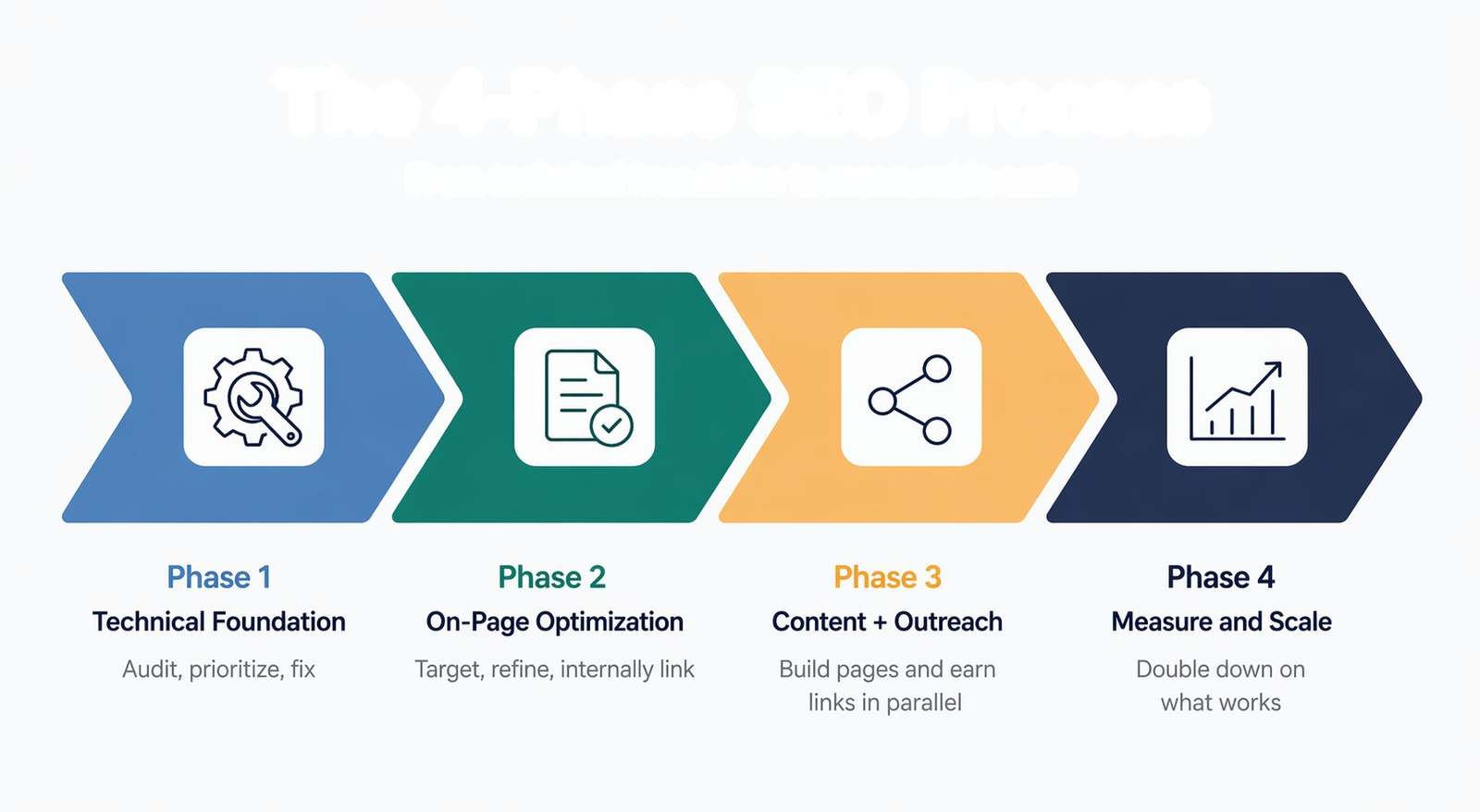
Phase 1: Technical Foundation
Everything starts here. Before I touch a single piece of content or send a single outreach email, I run a full technical audit using Screaming Frog.
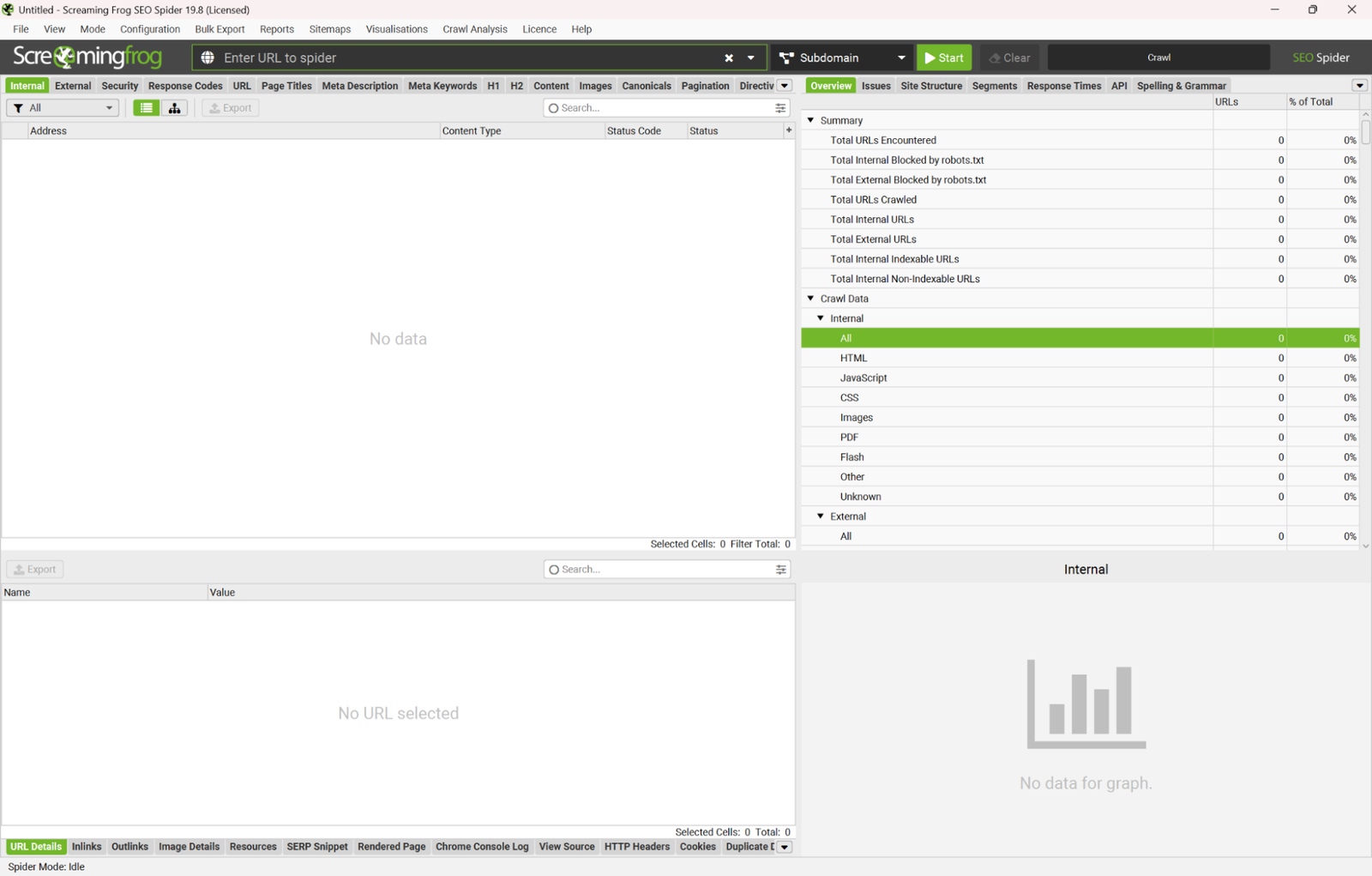
I build a sheet of every error that needs fixing, but here’s something a lot of SEOs get wrong: you don’t need to fix every single error in week one. That’s a fast track to overwhelm and paralysis.
Instead, prioritize the errors that are most likely to move the needle first and phase the rest out over the following 30 to 60 days.
The most common issues I run into? Improper canonicals, duplicate content, broken links, and keyword cannibalization. Duplicate URLs are especially common on Shopify stores. These aren’t glamorous fixes, but they are foundational. Leaving them unresolved is like trying to fill a leaky bucket.
The goal is to get the audit completed and the highest-impact fixes implemented within the first week. After that, we move forward.
Phase 2: On-Page Optimization
Once the technical foundation is solid, I look at how many pages or collections the site currently has and start optimizing those first.
For an existing site, I use Search Console data to identify which keywords pages are already getting impressions for and optimize around those.
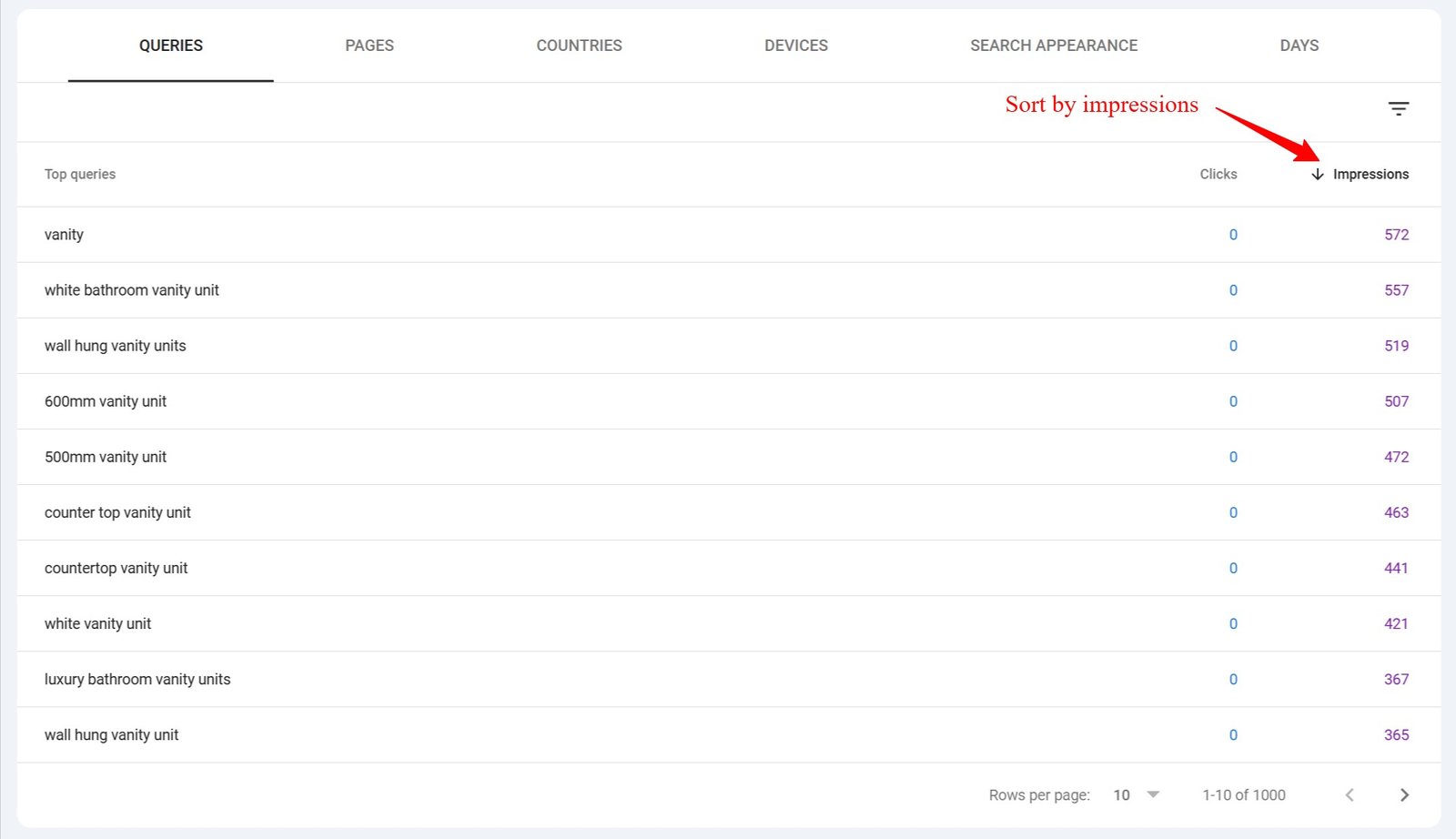
There’s no point guessing when the data is right there telling you what Google already associates with each page.
For a new site with no Search Console data to work from, I shift to keyword research and start building out the backlink strategy simultaneously. Both need to happen in parallel because waiting to finish one before starting the other just slows everything down.
The on-page basics I make sure are covered on every page: target keyword in the URL, title tag, H1, and within the first 100 words. Then two to three internal links woven naturally into each page pointing to related services, collections, or location pages. Simple, but consistently effective.
Phase 3: Content Mapping + Outreach
Once the existing pages are optimized, I move to creating new pages and launching the backlink outreach campaign. These two things run side by side because content and links reinforce each other. New pages need links to gain authority, and new links are most valuable when the content they point to is already optimized.
For local clients, I follow Nathan Gotch’s funnel approach of building out every service page and location page completely before moving to local blog content. Once that structure is in place, the local backlink campaign kicks in through chamber of commerce listings, local newspaper mentions, guest posts in local blogs, and partner links.
For ecommerce clients, I move faster on links. Ecommerce SEO is competitive at a national or international level, so you can’t afford to wait. I analyze competitor backlink profiles, identify where they’re getting their links, and go after those same sources for link insertions.
One thing worth noting here on the topic of authority: Google has publicly denied using domain authority as a ranking factor for years. But the 2024 Google API leak told a different story.
The leaked documents, first analyzed by Rand Fishkin of SparkToro and Mike King of iPullRank, revealed a metric called “siteAuthority” that functions almost identically to what the SEO industry has long called domain authority.
It measures a website’s overall trustworthiness and credibility and plays a significant role in determining rankings.
So when Google says domain authority doesn’t matter, take that with a grain of salt. The leak suggests otherwise, and my experience in the field backs it up.
Phase 4: Measure, Double Down, and Scale
By months three to four, you should have enough data to make real decisions. This is the phase most people skip, and it’s a mistake. Pull your Search Console data, look at your rank tracker, check your analytics, and see what’s moving the needle.
If impressions are climbing but clicks aren’t, your titles and meta descriptions might need work. If certain pages are jumping in rankings, they probably need more internal links and supporting content to push them further. If a specific link building tactic like link insertions is driving ranking improvements, do more of that.
Stop spreading effort evenly across everything and start doubling down on what the data tells you is working.
This is also the phase where I have honest conversations with clients about whether the campaign is on track. By month four, the leading indicators should be moving even if revenue impact isn’t fully visible yet.
Impressions up, more pages indexed, keyword rankings trending in the right direction. If none of those signals are present after four months of consistent work, the strategy needs to change, not just the tactics.
How to Get SEO Results Faster
There’s no shortcut that bypasses the fundamentals, but there are absolutely ways to accelerate your progress without compromising long-term results.
Target Low-Competition Keywords First
One of the smartest moves you can make early on is targeting long-tail keywords with low difficulty and being deliberate about how many keywords to target per page. These are winnable quickly, and ranking for them generates early traffic while simultaneously building the site’s authority for harder keywords down the road.
A useful filter when doing keyword research is looking for keywords where websites with low domain authority already rank in the top five positions. That signals a gap in the market that you can potentially fill even without a massive backlink profile.
Fix Technical Issues Early
Technical SEO should always come before content and link building. If Google is struggling to crawl or index your pages efficiently, every other effort is operating at a disadvantage.
Start with a Search Console audit, identify which important pages aren’t indexed and why, then run a full technical audit to surface broken links and crawl errors. Resolve these as quickly as your resources allow before moving on to anything else.
Refresh & Optimize Existing Content
If your site has been around for a while, you most likely have pages that are underperforming or declining in clicks. Refreshing those pages, updating statistics, and aligning them with current search intent produces faster results.
Creating brand new content from scratch takes significantly longer than improving what already exists. Google favors fresh content, and that is partly why Wikipedia dominates almost every query imaginable.
In my experience, this is one of the most underutilized tactics in all of SEO. Most site owners are so focused on new content that they completely ignore existing pages. Those pages already have impressions, some authority, and a real chance of ranking higher. A few targeted improvements to an existing page will almost always outperform starting from zero.
Build Internal Links Strategically
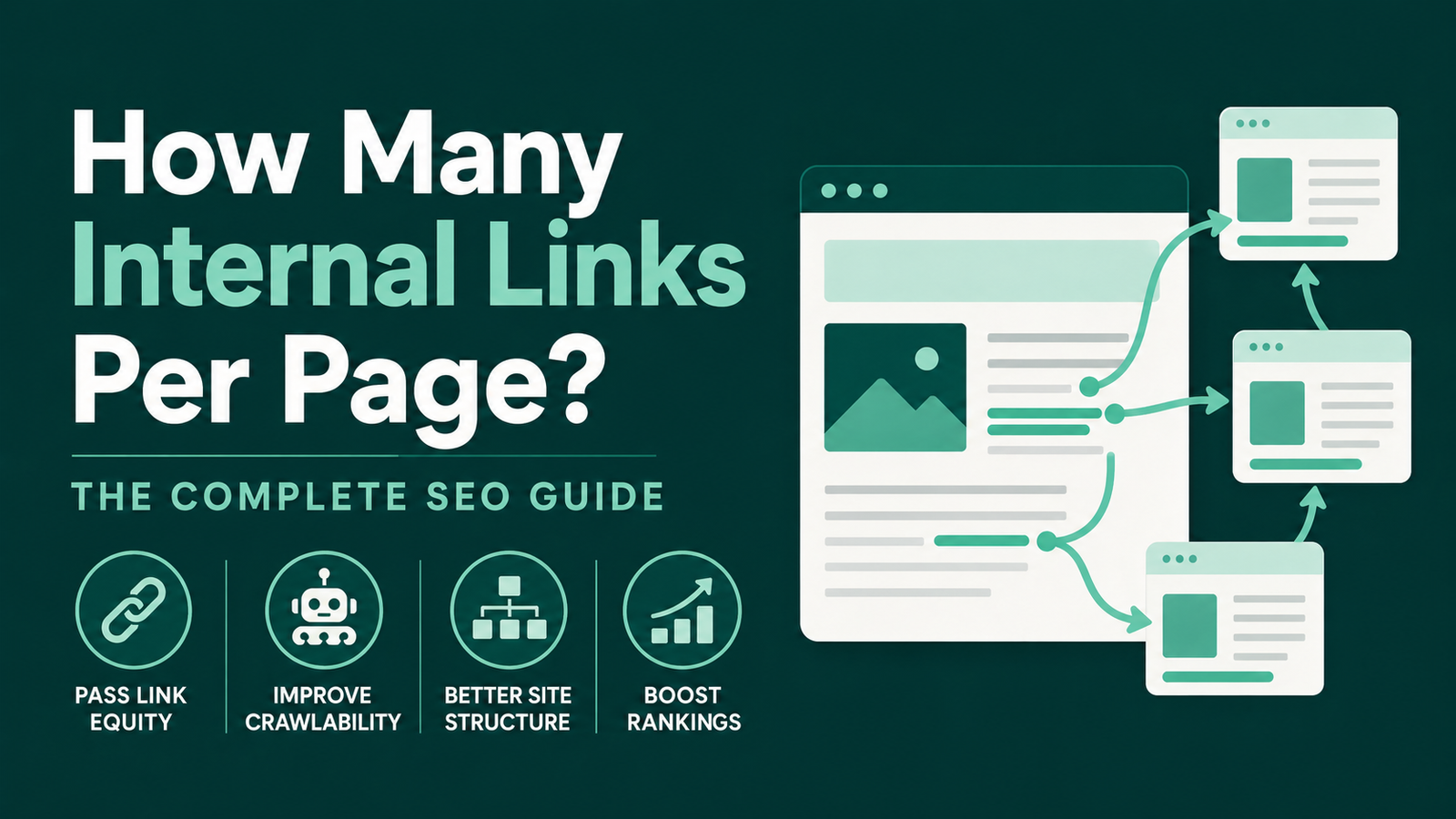
Internal links pass authority from one page to another and help Google understand which pages on your site matter most and discover new pages. If you have product or service pages that aren’t getting much traction, following a proper internal linking guide and adding relevant links from your stronger, more established pages can meaningfully boost their visibility.
The way I think about internal linking is always top of funnel to bottom of funnel.
For local SEO that means linking from blog posts to service pages, from service pages to location pages, and from location pages back to related services. Blogs should also link to other relevant blogs to build topical depth. The same logic applies to ecommerce, link from informational content down to collection pages, and from collection pages to other relevant collections.
What you want to avoid is orphaned pages sitting in isolation with no internal link equity flowing to them. Every important page on your site should have a clear path leading to it from somewhere higher up in the funnel.
Optimize for Featured Snippets
Featured snippets are the boxed answers that appear at the top of Google results pages. Winning one can effectively move your page to the top of the results without necessarily holding the number one organic ranking.
Look for keywords where you’re already ranking between positions two and ten, check whether a featured snippet exists for those queries, and adjust your content formatting to answer the question directly and concisely.
One thing I’ve found that works really well is answering the question as early as possible on the page. If you have a question like “what is the cost of Microsoft Surface Book 3”, answer it in the first line and then expand on it further down.
Don’t make Google hunt for the answer by burying it halfway through your content. Put it right at the top and structure everything else around it. And believe me, it works.
How to Measure SEO Progress
Rankings are just one indicator of progress, and honestly, they’re not always the most useful one early on. Here’s how to get a fuller picture.
Key Metrics to Track
Impressions in Google Search Console are one of the earliest signals that SEO work is gaining traction. Rising impressions mean Google is surfacing your site for more relevant queries, often weeks before rankings visibly improve. From there, track clicks, click-through rate, average position, and indexed pages.
Once traffic starts flowing, the metrics that really matter are conversions and revenue from organic traffic. Are visitors completing purchases? Filling out contact forms? Signing up for newsletters? Those outcomes are the real measure of SEO success, and they should be tracked in Google Analytics from day one.
In terms of knowing whether SEO is working or not, I generally tell clients that by months four to six you should have a clear enough picture to make that call. If impressions are growing, if more pages are getting indexed, and if rankings are moving even slightly, the campaign is working.
If none of those leading indicators are moving after that window, it’s time to have an honest conversation about whether the strategy needs to change.
Tools to Use
Google Search Console and Google Analytics are free, essential, and should be set up before anything else.
For keyword tracking, competitive analysis, and technical audits, tools like Semrush, Ahrefs, and Screaming Frog provide deeper insights.
Enterprise sites with more complex needs may benefit from platforms like Botify or BrightEdge, which offer advanced crawl management and reporting.
A simple tracking spreadsheet that logs tasks, deadlines, and performance metrics goes a long way toward keeping an SEO program accountable and organized, especially when reporting to stakeholders who want to see evidence of progress before rankings shift.
Why SEO Is an Ongoing Effort (Not a One-Time Project)
Many people think that once you reach page one, you stay there. That’s one of the most common misconceptions I hear, and it’s simply not true.
Search results shift constantly. Competitors improve their content. Google rolls out algorithm updates. User behavior evolves. A Semrush study found that while 41% of domains reached the top ten within six months, only 27% remained there through the end of the thirteen-month study period. Ranking is not permanent. Sustaining it requires ongoing effort.
AI-powered search tools are adding another layer of complexity. Google’s AI Overviews, ChatGPT Search, and Perplexity are changing how people discover information, and optimizing for visibility in those platforms is becoming an extension of traditional SEO. This shift has many wondering whether SEO is dead, but the reality is more nuanced.
The same fundamentals apply: authority, trustworthiness, and genuinely helpful content. But the landscape keeps evolving, and staying visible means evolving with it.
If there’s one thing I’d want every client and every person learning SEO to take away from this, it’s this: don’t let anyone guarantee you a ranking in three months or four months. Do the work, measure consistently, and let your results speak for themselves.
The businesses that approach SEO as an ongoing practice rather than a one-time project are the ones that consistently win in search over the long term.
Start with a solid technical foundation, build with purpose, measure consistently, and stay patient. The results will come.