- Target one primary keyword per page plus two to four supporting keywords
- More keywords don’t mean more traffic, they create unfocused pages that rank for nothing well
- Google ranks your page for hundreds of related terms if your content is clear and comprehensive
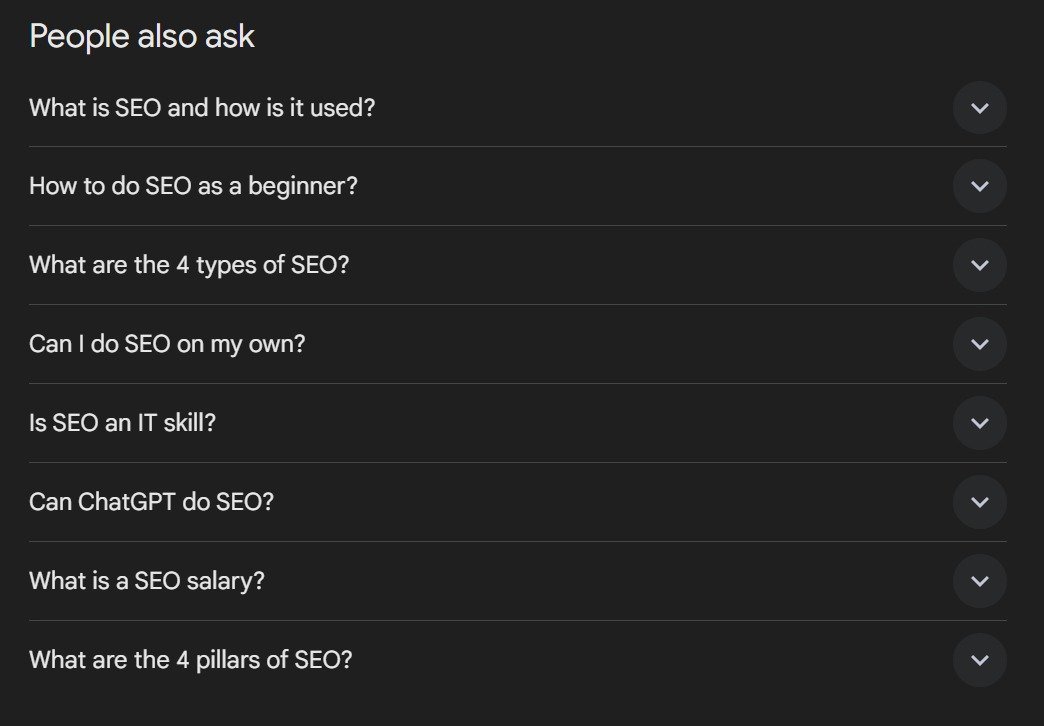
- Use People Also Ask questions as additional long-tail keywords, they are underused and effective
- Use keyword clustering as your site grows to prevent cannibalization
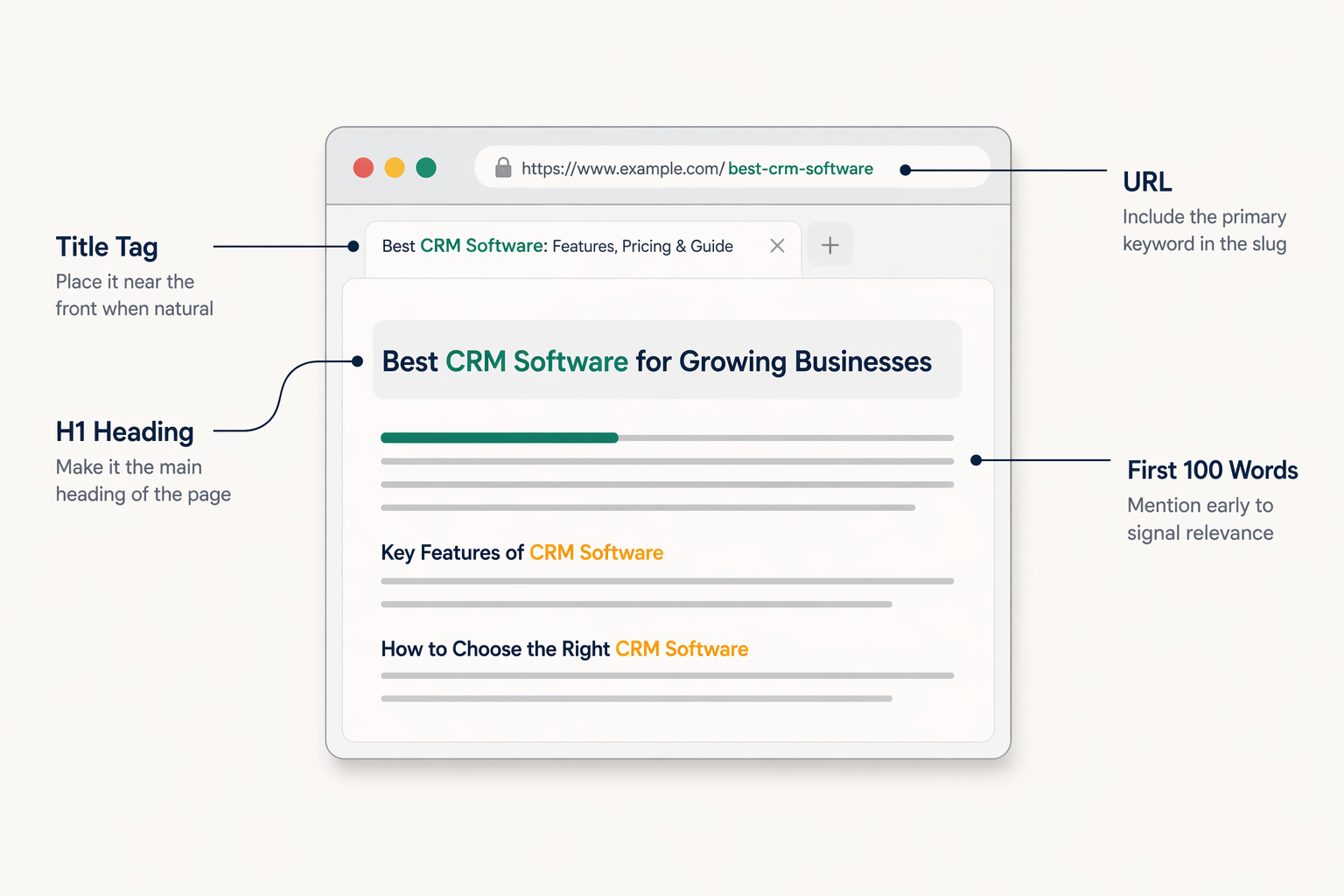
- Place your primary keyword in the URL, title tag, H1, and first 100 words
- Write for your reader and stop counting keywords
People approach keyword research like a numbers game. How many keywords should I use on a page? Where exactly should I put them? How many times should I repeat them? Those are the wrong questions entirely.
You can follow every keyword rule perfectly and still get almost zero traffic. Because the right number of keywords on a page matters far less than most people think. What actually matters is clarity, structure, and intent, especially given how SEO has shifted in recent years. Get those right and keywords practically take care of themselves.
I’ve worked on SEO across ecommerce sites, service businesses, and content-heavy blogs. And the pattern I keep seeing is the same. Sites that struggle with traffic almost always have a structure or intent problem, not a keyword problem. Let me walk you through it.
The Short Answer
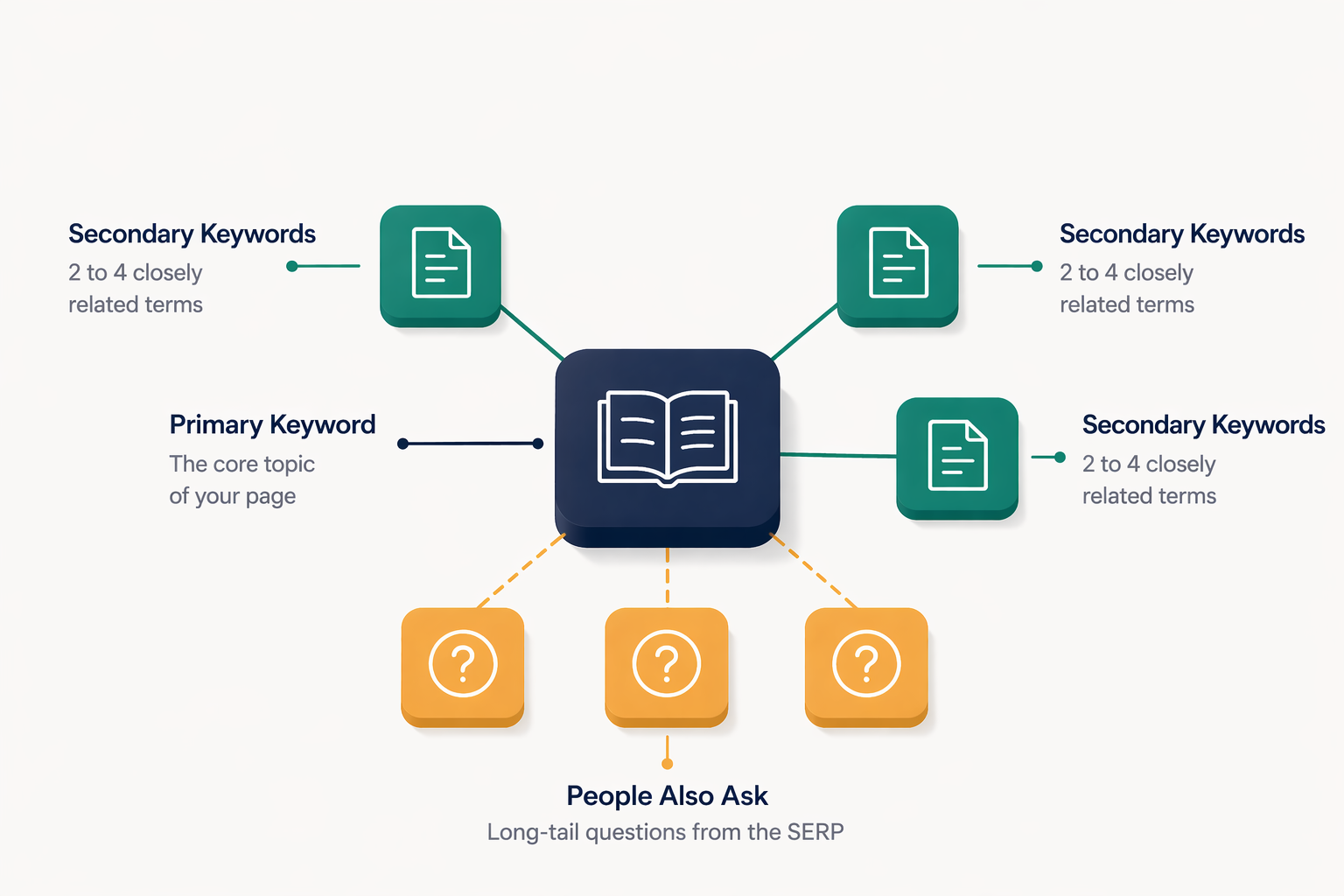
Target one primary keyword per page, plus two to four closely related secondary keywords. That’s the consensus across the SEO community, and honestly, it’s what works in practice too.
Targeting more keywords does not automatically mean more traffic. What it usually creates is a page that lacks focus, confuses search engines, and ends up ranking for nothing particularly well. The goal isn’t to squeeze every variation of a phrase into a single page. It’s to own one topic deeply and let Google connect the dots from there.
Think of your primary keyword as the title of a book. Your supporting keywords are the chapters inside it. They all serve the same story, just from different angles.
Within that framework, there’s one extra step I’ve added to my own process that most guides skip entirely. On top of the standard two to four secondary keywords, I like to pick up the People Also Ask questions that appear in Google’s search results for your topic or query.
These act as long-tail secondary keywords and are genuinely underused. I’ve had pages get pulled into the featured snippet and the PAA section just by structuring content around those questions. It’s a small habit that pays off more than people realize.
Why One Primary Keyword Is Enough
Google is sophisticated enough to understand that different search phrases mean the same thing. “Keyword research guide” and “how to do keyword research” satisfy the same intent, and Google knows it.
You don’t need a separate page for every variation, and you definitely don’t need to awkwardly repeat every synonym throughout your content.
Search engines understand synonyms, reworded phrases, and even misspellings automatically. If your content clearly addresses a topic, Google will connect it to related queries without you having to force anything.
An average page ranking in position one can also rank in the top ten for more than hundreds of other related keywords. One well-optimized page, built around a single primary keyword, can generate traffic from hundreds of terms you never explicitly targeted.
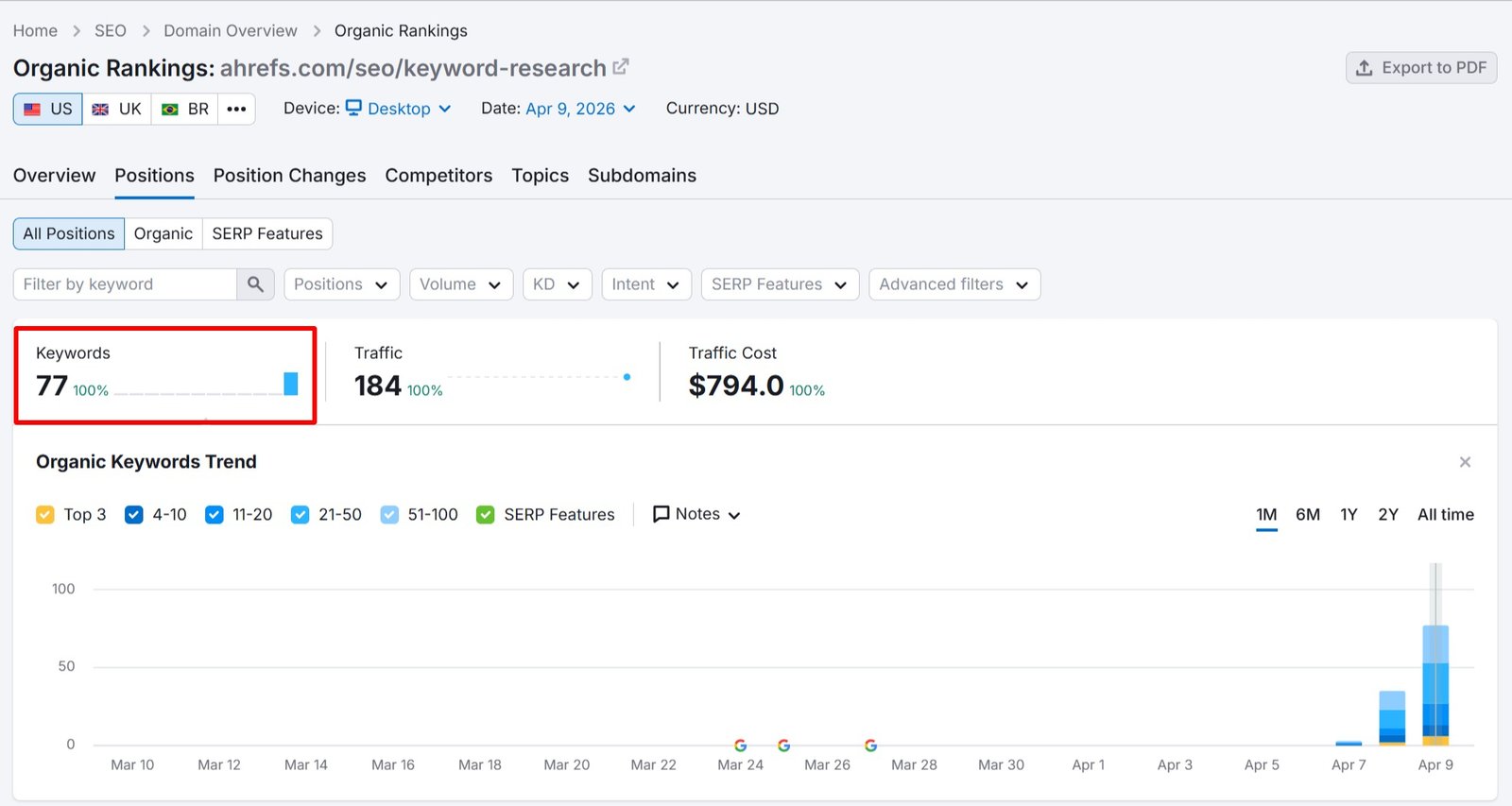
Look at this page from Ahrefs which is ranking for more than 77 keywords in SERPs.
A page optimized for a keyword with 1,400 monthly searches can end up generating over 8,000 monthly visits because it naturally ranks for hundreds of related long-tail and broad match terms. That’s the compounding power of focused, comprehensive content. You stop chasing every keyword individually and start building pages that pull traffic from all directions.
The Role of Supporting Keywords
If the primary keyword defines the topic, supporting keywords define the depth. They represent the subtopics and related questions a reader naturally expects to find answered when they land on your page. Covering these isn’t just good for SEO, it’s good for the reader.
Think about it from a user perspective. If someone searches “what is seo” they’ll probably also want to understand on-page optimization, technical SEO, or maybe which tools like Ahrefs or Screaming Frog are worth using.
A page that addresses only the literal primary keyword but skips all the natural follow-up questions is going to feel thin. Search engines notice that too.
The best supporting keywords aren’t just synonyms. They’re genuine subtopics that round out the conversation. Use them as natural subheadings throughout your content and they’ll fit organically without any awkward shoehorning.
How Many Supporting Keywords to Use
Two to four supporting keywords per page is the practical sweet spot. For shorter content, two is plenty. For a comprehensive guide, four or five can work comfortably without anything feeling forced.
But honestly, the right number isn’t a fixed count. It’s whether you’ve covered the topic fully. If a reader could finish your page and still have obvious unanswered questions about the topic, you probably need more depth, which naturally means more supporting keywords guiding that structure.
Finding the Right Keywords
Start with a seed keyword, a broad term representing your general topic, and run it through a keyword research tool like Ahrefs, Semrush, or Google Keyword Planner. Look at related terms, search volumes, and difficulty scores.
You want the keyword that best represents the core of what your page covers, has a realistic ranking difficulty for your site’s current authority, and matches what your audience actually wants to find.
That last point about ranking difficulty is worth pausing on, especially if you’re earlier in your SEO journey. One of the most common mistakes I see from people new to SEO is going after high-competition keywords right out of the gate. Resist that temptation.
Targeting “SEO strategy” when your site is brand new is a losing battle. Instead, go specific. Target something like “best SEO strategy for landscaping businesses.”
Lower competition, much higher conversion intent, and a realistic shot at ranking. Long-tail, niche-specific keywords are where new sites should be building their early wins.
Once your primary keyword is set, finding supporting keywords is about understanding what subtopics belong in the same conversation.
Look at the People Also Ask section in Google for your primary keyword. Those questions are Google telling you exactly what else people want to know on the same topic. They make excellent supporting keywords and natural subheadings.
You can also look at the organic rankings data on top-performing pages in your niche using tools like Semrush or Ahrefs. What related terms are the top ten results ranking for? Those are strong candidates for your supporting keywords. Content gap tools can surface subtopics your competitors are covering that you’re missing, which represent real reader expectations you haven’t met yet.
Advanced Strategy: Keyword Clustering
What Is Keyword Clustering?
Keyword clustering is the process of grouping related keywords together based on shared search intent and how much overlap exists in their actual search results.
The logic is straightforward. If Google shows largely the same pages for two different keyword phrases, those phrases are satisfying the same intent and belong on the same page. Rather than targeting one keyword at a time, you’re targeting an entire cluster of related terms with a single comprehensive piece of content.
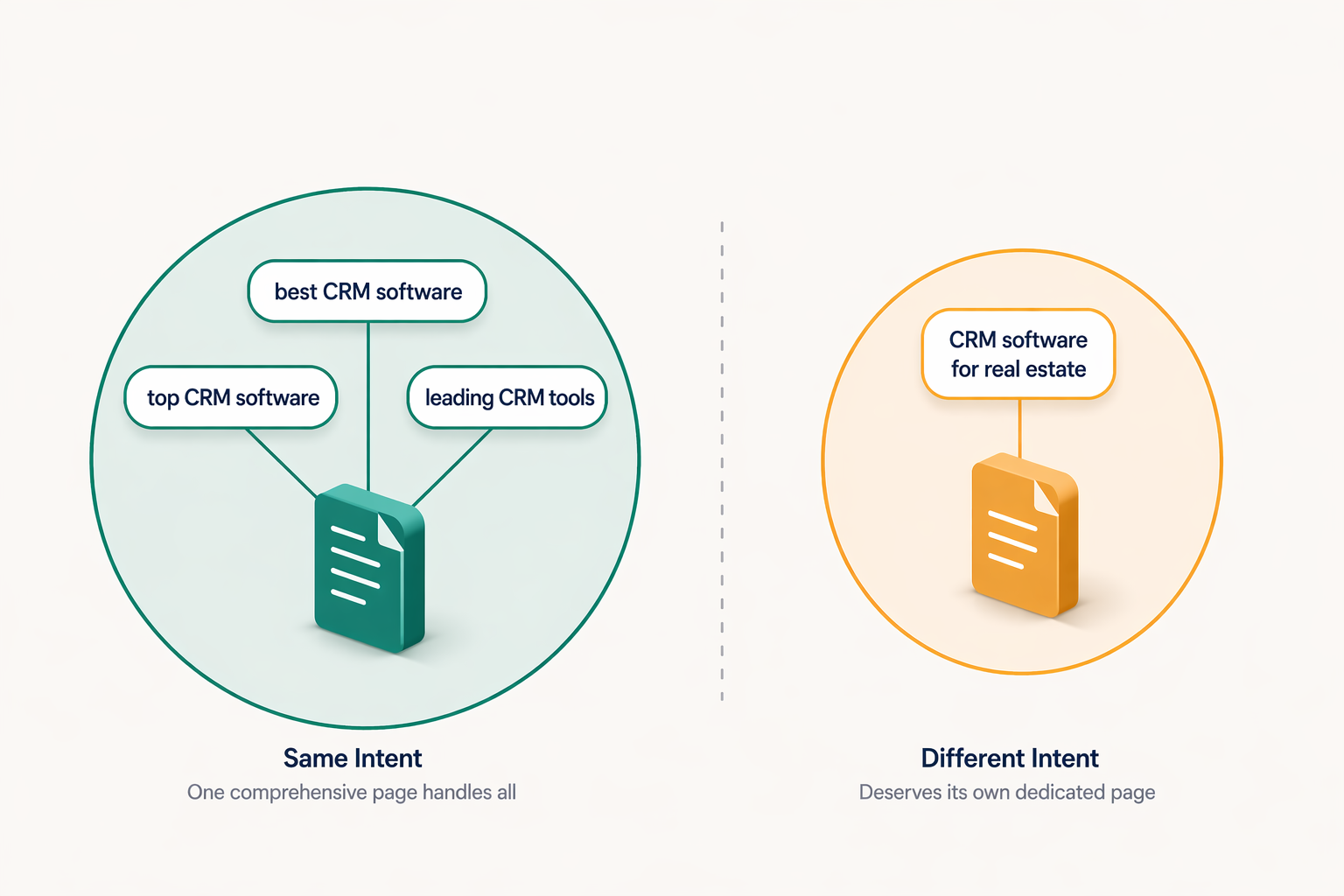
A simple example is “best CRM softwares” and “top CRM softwares” show almost identical search results, so one page handles both. But “crm software for real estate” often shows different results, meaning it deserves its own dedicated page.
I started using keyword clustering not that long ago, and I primarily use it when building content strategies for ecommerce sites. The volume of pages involved in ecommerce makes a page-by-page approach genuinely unmanageable, and clustering brings real order to what can otherwise become a chaotic content structure.
How Clustering Prevents Cannibalization
Keyword cannibalization is one of the most costly and overlooked problems in SEO. It happens when multiple pages on your site target similar keywords and end up competing against each other in search results. Instead of one strong page ranking well, you have two or three weaker pages splitting authority and confusing Google about which one to show.
Clustering solves this by mapping out which keywords belong together before you create any content. Each cluster gets assigned to exactly one page, which means every piece of content has a distinct, focused purpose. No overlap, no competition, no confusion.
When to Use Clustering Over Basic Optimization
So when does clustering actually become necessary? It depends on where you are with your site. If you’re just starting out or managing something small, the basic one primary keyword approach is perfectly sufficient. Get comfortable with keyword research, build content with a clear primary focus, and don’t overcomplicate it.
But if you’re publishing regularly, managing a large site, or working on ecommerce, clustering becomes essential. Every piece of content you add strengthens the overall structure rather than risking cannibalization or redundancy.
For the actual clustering work, I use Claude. The output is genuinely impressive, and I find it handles semantic grouping better than most dedicated tools.
That said, use whatever AI tool you’re most comfortable with. Whether that’s Claude or GPT, it genuinely comes down to personal preference. Just make sure you always manually review the output because AI tools can sometimes group keywords with different intents together, and that’s exactly the mistake clustering is meant to prevent.
This is the prompt I use with Claude for keyword clustering:
Group these keywords into clusters based on their search intent and semantic similarity. For each cluster, identify a primary keyword that best represents the group and list the related variations. Ensure each cluster contains keywords with the same search intent and similar SERP results, so the cluster can be targeted with a single comprehensive piece of content. Remove irrelevant or repeating keywords.
IMPORTANT: Do NOT force keywords into clusters if they deserve their own separate page. Create a standalone page when the keyword has distinctly different search intent, the topic requires significant depth on its own, top-ranking pages focus exclusively on that specific topic, or the keyword targets a different stage of the user journey.
How to Optimize Your Content
Keyword Placement Best Practices
Keyword placement is simpler than most guides make it sound.
Your primary keyword needs to appear in four key places:
- URL
- Title tag
- H1 heading
- Within the first 100 words of your content
Those placements send clear signals to search engines about what the page is focused on. After that, use it naturally in a subheading or two if it fits, and then just write.
Supporting keywords belong in your H2 and H3 subheadings where they fit naturally, and throughout the body of your content where they make sense contextually. That’s it. There’s no magic formula beyond that.
Avoiding Keyword Stuffing
I can usually spot an over-optimized page within the first few seconds of reading it. The signs are pretty consistent: the target keyword is repeated unnaturally throughout the content, exact-match anchor text is overused in internal links, there are irrelevant internal links shoved in just to hit some arbitrary linking quota rather than following a proper internal linking strategy, and the meta tags feel forced rather than written for a human reader.
These things don’t just feel bad to read, they actively hurt rankings. Google’s algorithms are sophisticated enough to detect unnatural optimization patterns, and they penalize it.
The fix is straightforward: write for your reader first. Cover the topic thoroughly and naturally, and your keywords will appear at an appropriate frequency without any deliberate effort to hit a specific count. If you ever pause mid-sentence thinking “this sounds weird just to fit the keyword,” rewrite it. That instinct is correct every time.
Tracking and Refining Your Strategy
Publishing great content is step one. Knowing whether it’s actually working is step two. Google Search Console is the first tool I’d recommend setting up, and it’s free. It shows you exactly which queries are triggering your pages in search results, including keywords you never explicitly targeted.
For deeper analysis, tools like Ahrefs and SEMrush give you visibility into ranking positions, traffic estimates, and competitor data that Search Console alone can’t provide.
Spotting cannibalization is actually simpler than most people make it. In Google Search Console, filter by your target query and look at impressions, clicks, and position. If two of your pages are appearing for the same query, that’s cannibalization and it needs to be addressed.
I also like to maintain a simple spreadsheet that maps each page to its intended primary keyword. This makes it immediately obvious when two pages are overlapping in topic or intent, and you can catch the problem before it affects rankings rather than after.
When you do find cannibalization, the fix depends on the situation. You can add a canonical tag on the secondary page pointing to the main one, which tells Google which version to prioritize. Or you can combine both pages into one stronger piece of content and redirect the secondary URL to the main page.
Either approach works. Personally, I tend to start with a canonical tag, then consolidate and redirect once I’ve merged the content properly.
Once you’ve cleaned up any existing cannibalization and have a clear keyword map in place, maintaining it becomes straightforward. Check in quarterly, keep your spreadsheet updated as you publish new content, and the whole system stays manageable without becoming a full-time job.
Keyword strategy is not complicated, but it rewards consistency and clear thinking. Start with one primary keyword per page, build supporting content around genuine subtopics, and evolve into clustering as your site grows. Do that consistently and you’ll be ahead of the vast majority of sites competing for the same traffic.